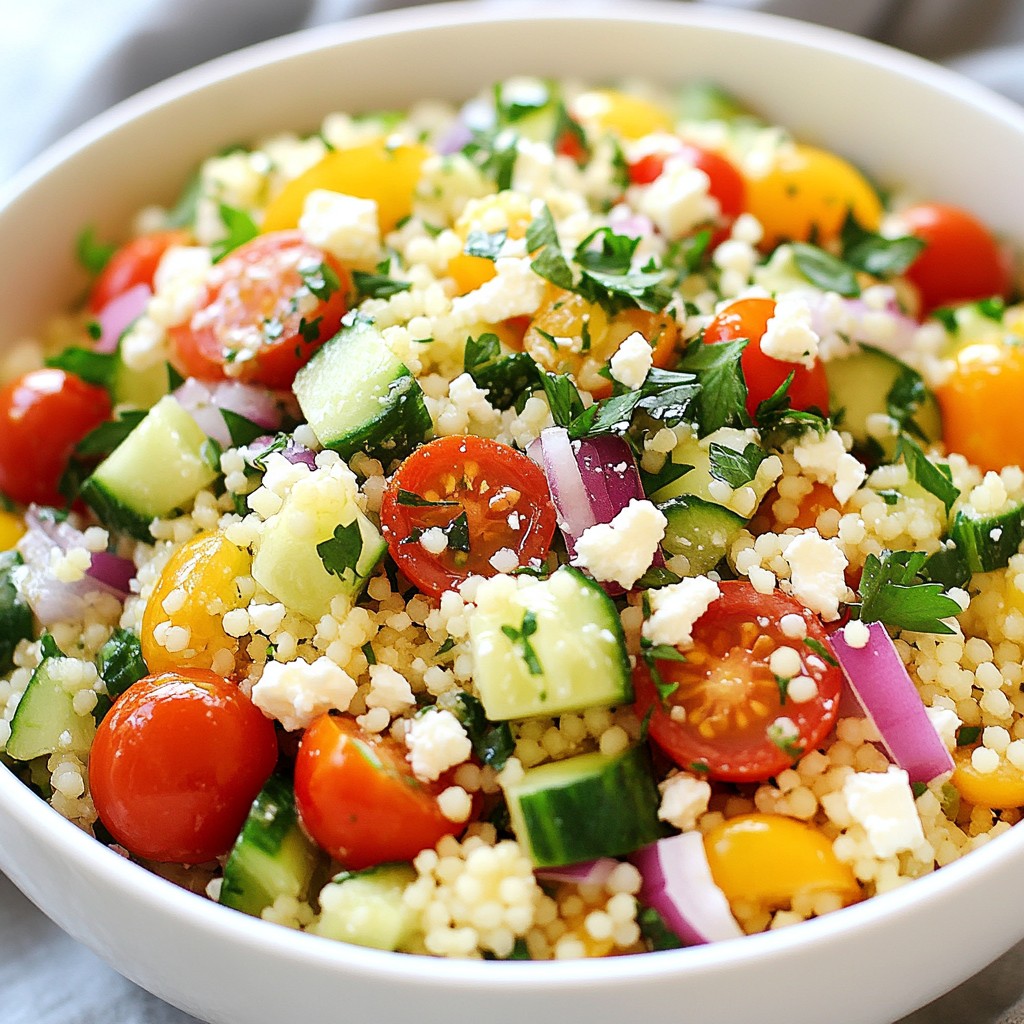
Looking for a fresh, vibrant dish that bursts with flavor? You’ve found it! My Lemon Herb Couscous Salad combines zesty lemon, colorful veggies, and fragrant herbs to create a dish that’s both easy to make and fresh to eat. Whether you’re planning a light lunch or a festive dinner, this salad stands out. Let’s dive into the ingredients and steps to turn simple fare into something extraordinary!
Why I Love This Recipe
- Fresh and Vibrant: This salad is packed with fresh vegetables and herbs, making it a refreshing side dish or light meal.
- Quick and Easy: With minimal prep time, this recipe is perfect for busy weeknights or last-minute gatherings.
- Versatile: You can easily customize this salad by adding your favorite ingredients, such as grilled chicken or chickpeas.
- Flavorful Dressing: The zesty lemon dressing elevates the dish, making every bite burst with flavor.
Ingredients
Complete list of ingredients
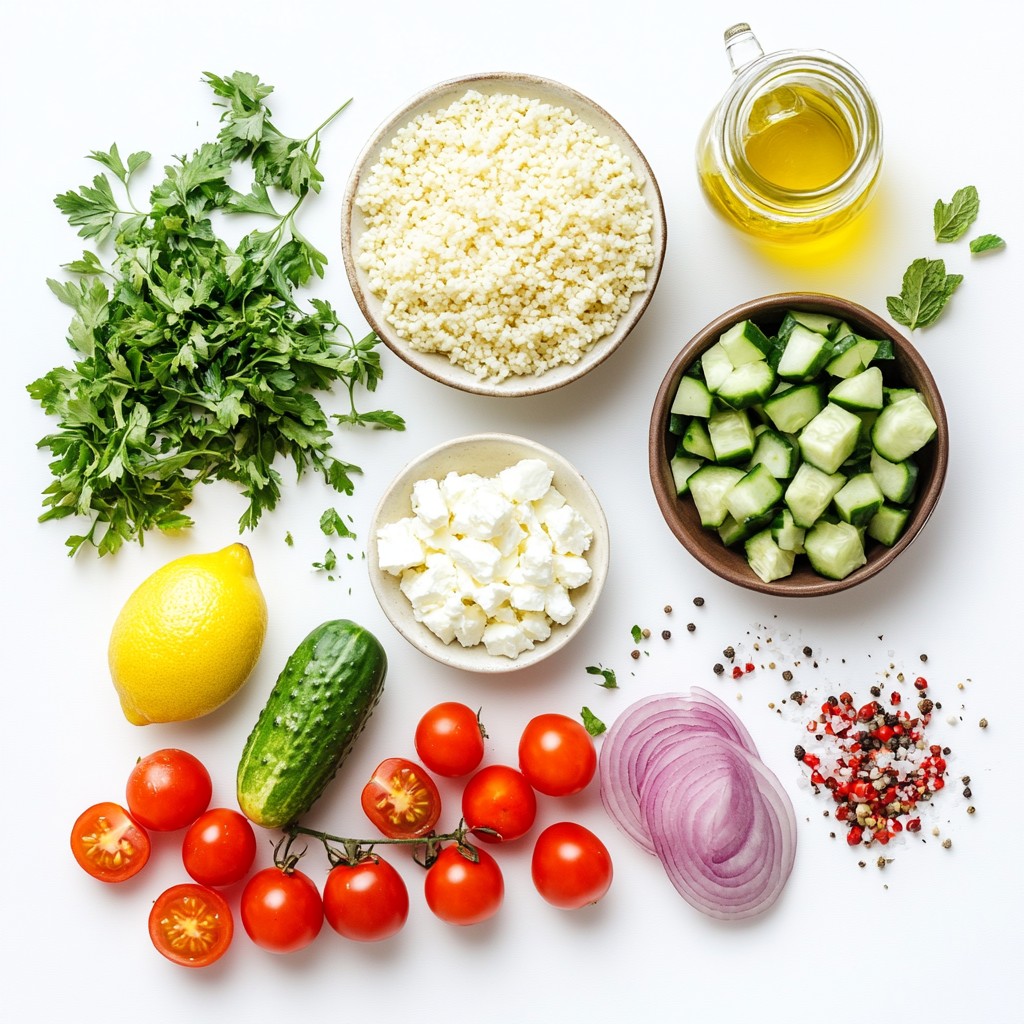
To make a Lemon Herb Couscous Salad, gather the following:
- 1 cup couscous
- 1 1/4 cups vegetable broth (or water)
- 1/2 cup cherry tomatoes, halved
- 1 cucumber, diced
- 1/4 red onion, finely chopped
- 1/2 cup fresh parsley, chopped
- 1/4 cup fresh mint, chopped
- 1/4 cup feta cheese, crumbled
- 1/4 cup olive oil
- Juice of 1 large lemon
- Zest of 1 lemon
- Salt and pepper to taste
Tips for selecting fresh vegetables and herbs
When choosing vegetables and herbs, look for bright colors and firm textures. For cherry tomatoes, pick ones that feel plump and have shiny skins. Cucumbers should be crisp and free of soft spots. When it comes to herbs, select parsley and mint that smell fragrant. Fresh herbs should not look wilted or brown. Always choose organic when possible to enhance the flavor and health benefits.
Substitutes for feta cheese and couscous
If you can’t find feta cheese, try using goat cheese or a dairy-free cheese for a vegan option. For couscous, you can swap it with quinoa, bulgur, or even farro. Each substitute has a unique taste and texture, but they all work well in salads. Just be sure to adjust cooking times according to the substitute you choose.
Step-by-Step Instructions
Detailed cooking method
To start, bring 1 1/4 cups of vegetable broth or water to a boil in a medium saucepan. This step adds flavor to the couscous. Once it boils, remove the pan from heat. Stir in 1 cup of couscous and cover the pan. Let it sit for about 5 minutes to absorb the liquid. After that, fluff the couscous with a fork to separate the grains. Spread it out on a plate to cool completely.
While the couscous cools, prepare the vegetables. Take 1/2 cup of cherry tomatoes and cut them in half. Dice 1 cucumber and chop 1/4 of a red onion finely. Then, chop 1/2 cup of fresh parsley and 1/4 cup of fresh mint. Crumble 1/4 cup of feta cheese.
In a large mixing bowl, combine the cherry tomatoes, cucumber, red onion, parsley, mint, and feta. In a small bowl, whisk 1/4 cup of olive oil, juice from 1 large lemon, zest from the same lemon, salt, and pepper. Pour this dressing over the salad mixture and toss gently. Finally, add the cooled couscous and mix until everything is evenly combined. Adjust salt and pepper to taste. Chill the salad in the fridge for at least 30 minutes before serving.
Important cooking tips for perfect couscous
- Use vegetable broth for more flavor.
- Make sure to fluff the couscous well after cooking.
- Allow the couscous to cool completely before mixing.
- Fresh herbs make a big difference in taste.
- Taste and adjust salt and pepper as needed.
Alternatives to stovetop cooking (e.g., microwave)
You can cook couscous in the microwave for a quicker method. Combine 1 cup of couscous with 1 1/4 cups of boiling vegetable broth in a microwave-safe bowl. Cover it and microwave on high for about 4-5 minutes. After cooking, fluff it with a fork just like the stovetop method. This saves time without losing quality.
Tips & Tricks
How to add more flavor to the salad
To boost the flavor of your Lemon Herb Couscous Salad, use fresh herbs. Fresh parsley and mint add brightness. You can also try basil or dill for a different taste. Add a pinch of red pepper flakes for a hint of heat. This small change can make a big difference.
Measuring and mixing tips
When measuring ingredients, use dry measuring cups for couscous. For liquids like olive oil, use liquid measuring cups. This helps ensure accuracy. When mixing, always start with the dressing. Whisk it well before adding it to the salad. This ensures every bite is full of flavor. Stir gently to avoid breaking the feta cheese.
Best practices for combining ingredients
Mix your salad ingredients in a large bowl. Start with the vegetables and herbs, then add the couscous. This helps keep everything evenly distributed. Toss gently to avoid mashing the tomatoes or cucumbers. Let the salad chill in the fridge for at least 30 minutes. This allows the flavors to blend beautifully.
Pro Tips
- Quality Ingredients: Use fresh vegetables and high-quality feta cheese for the best flavor in your salad.
- Chill for Flavor: Allow the salad to chill for at least 30 minutes before serving to let the flavors meld together.
- Customizable Additions: Feel free to add other ingredients like olives, bell peppers, or chickpeas for extra texture and flavor.
- Herb Freshness: Use fresh herbs instead of dried to enhance the brightness and flavor of the salad.
Variations
Suggestions for adding proteins (e.g., chicken, chickpeas)
You can boost the salad's nutrition by adding protein. Grilled chicken is a great choice. It adds flavor and keeps you full. Simply slice the chicken and mix it into the salad. Chickpeas are another fantastic option. They are plant-based and pack a protein punch. Use canned chickpeas for convenience. Rinse them well before adding to the salad. You can also try shrimp or tofu for more variety.
Seasonal ingredient swaps
Seasonal ingredients can change the salad’s taste and texture. In summer, add sweet corn or bell peppers for crunch. Fall brings roasted butternut squash, which adds warmth and sweetness. In winter, try adding roasted carrots or beets for color and nutrients. Fresh herbs like basil or dill can also offer new flavors depending on what’s in season.
Vegan and gluten-free alternatives
For a vegan version, replace the feta cheese with tofu or avocado. Both options provide creaminess and healthy fats. You can also use nutritional yeast for a cheesy flavor without dairy. For gluten-free eating, swap couscous with quinoa or rice. Both grains work well and have a similar texture. These swaps keep the dish delicious while meeting different dietary needs.
Storage Info
Best methods to store leftovers
To store your leftover Lemon Herb Couscous Salad, use an airtight container. This helps keep the salad fresh. Make sure to let it cool completely before sealing it. If you have extra dressing, store it separately to avoid soggy couscous. When ready to eat, you can drizzle the dressing right before serving.
How long the salad lasts in the refrigerator
This salad stays fresh in the refrigerator for about 3 to 4 days. However, for the best taste, eat it within 2 days. As the days go by, the vegetables may lose their crunch. So, it's best to enjoy it early.
Tips for reheating or remaking the salad
If you want to reheat the couscous, do it gently. Use a microwave and warm it for 30 seconds. Stir and check the heat. Be careful not to overheat it. If you prefer, you can also enjoy the salad cold. If the salad feels dry, add a little olive oil or lemon juice to freshen it up.
FAQs
Can I make Lemon Herb Couscous Salad ahead of time?
Yes, you can make this salad ahead of time. I often prepare it a few hours before serving. This allows the flavors to mix well. Just keep it in the fridge until you are ready to serve.
What can I serve with this salad?
This salad pairs well with many dishes. You can serve it with grilled chicken or fish. It also works nicely with roasted veggies. For a lighter option, try it with a simple soup.
How do I prevent the couscous from becoming mushy?
To keep couscous fluffy, use the right water ratio. I suggest using 1.25 cups of liquid for every cup of couscous. After boiling, let it sit for five minutes. Fluff it with a fork to separate the grains. This way, your couscous will stay light and airy.
You learned how to make a tasty Lemon Herb Couscous Salad. We covered all the ingredients you need, like fresh veggies and herbs, and even substitutes for feta cheese and couscous. I shared step-by-step cooking methods, tips for perfect couscous, and alternative cooking methods. You now know how to add flavor, mix well, and combine ingredients smoothly.
Consider adding proteins or swapping in seasonal ingredients for variety. When storing leftovers, follow the tips to keep your salad fresh. This salad is fun to make and suits different diets. Enjoy your cooking!